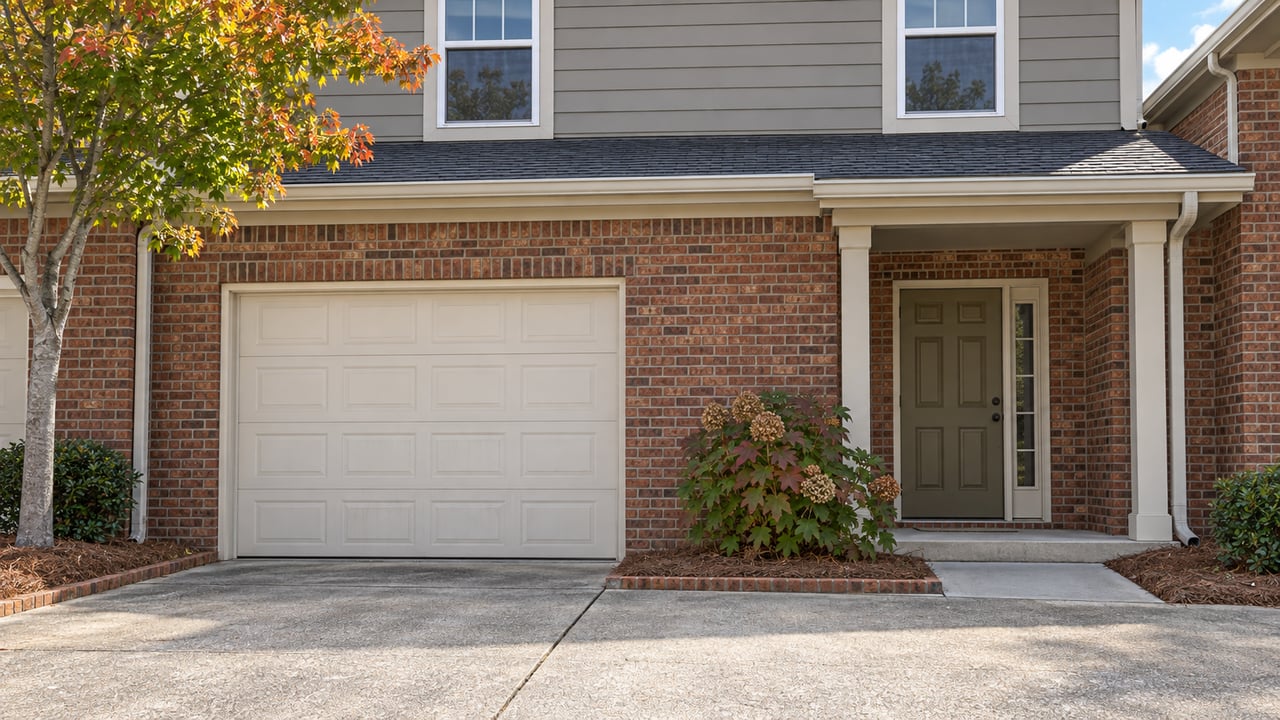
In Smyrna, a Resale Townhome Is Competing With a Mortgage Rate, Not a Price
October 15, 2026
October 15, 2026
On October 8, 2026, Freddie Mac's weekly survey put the average 30-year fixed mortgage rate at 7.40%. That was up from 7.28% the week before and 6.30% a year earlier. In the same week, a few minutes from Truist Park, Toll Brothers was advertising a 5.49% fixed rate on select quick move-in townhomes at Rowan Walk in Smyrna.
Picture a buyer comparing one of those townhomes with a resale a mile away. They are comparing two different monthly payments. The resale seller can offer concessions too, but federal lending guidelines cap them, and those caps don't fall the same way on a builder with an affiliated mortgage company. This shapes how attached homes in Smyrna are priced right now.
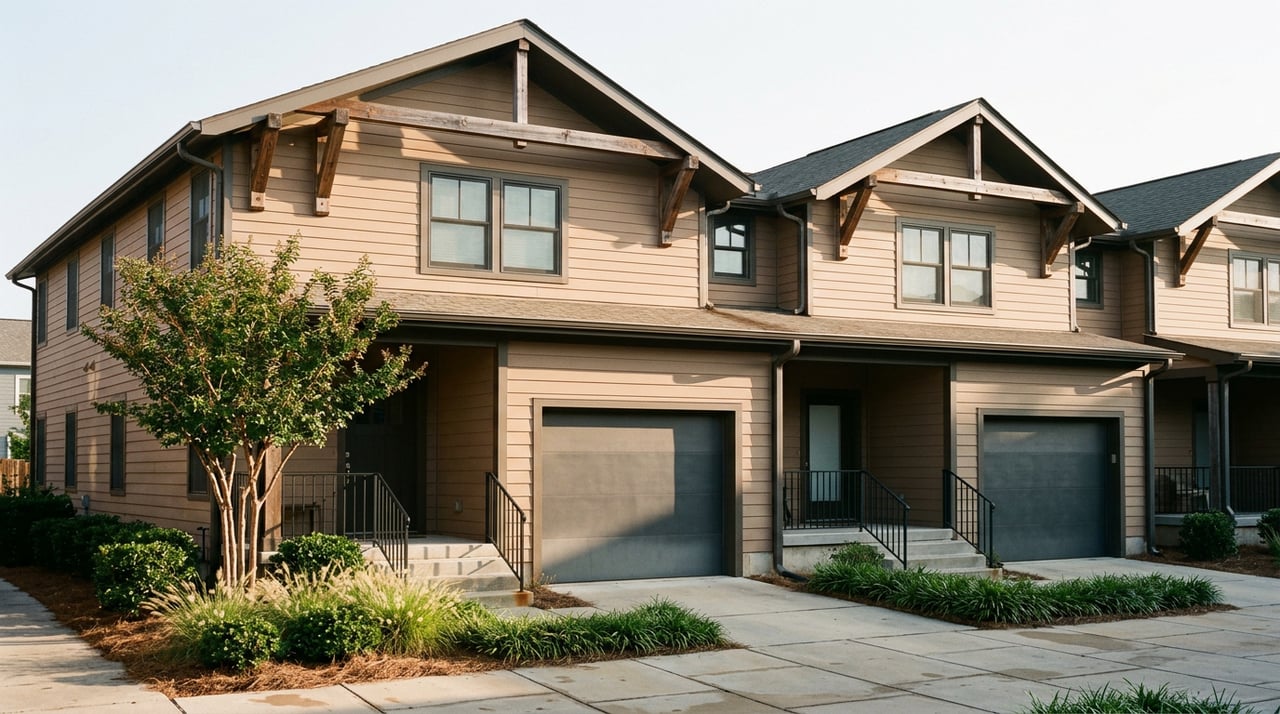
Rowan Walk's sales center is at 1324 Koa Ct. Toll describes the community as two collections of townhomes from 1,919 to more than 2,677 square feet, with a pool, a cabana and lawn care included. In early October the builder's site listed eight quick move-in homes, with a price range of $490K to $660K.
The Toll Brothers rate offer has specific terms:
On top of that, the community's Oct 3 to Oct 18 sales event advertises up to $15,000 toward closing costs on select homes when financing through Toll Brothers Mortgage Company. The fine print also says incentives are "subject to maximum interested party contribution limits based on loan program and down payment." Those limits are where the gap between builder and resale seller comes from.
Toll's payment factor gives a principal-and-interest payment of about $2,835 a month on the $500,000 example loan. At the 7.40% weekly average, the same loan works out to roughly $3,462 a month on standard amortization math. Freddie Mac's figure is a national average, not a quote, so individual offers will vary.
| Rate on a $500,000, 30-year fixed loan | Approximate monthly principal and interest |
|---|---|
| 5.49%, builder-affiliated offer | $2,835 |
| 7.40%, Freddie Mac average as of Oct 8, 2026 | $3,462 |
| Difference | About $627 |
Taxes, insurance and HOA dues come on top of both. On principal and interest alone, a resale townhome listed at the same price starts about $600 a month behind. A seller who wanted to close that gap with price alone would need a large reduction. Most sellers try to close it with concessions instead, and concessions are capped.
Fannie Mae's Selling Guide, section B3-4.1-02, defines interested parties to a sale. The list includes the property seller, the builder or developer, the real estate agent and any of their affiliates. What those parties can contribute toward a buyer's costs is capped as a share of the lower of the sales price or appraised value. The cap isn't based on the loan amount:
Under the same section, a rate buydown paid for by an interested party or its affiliated lender counts toward that cap. Concessions above the cap are treated as sales concessions and deducted from the sales price, and the loan-to-value ratio is then recalculated. Financing concessions also can't exceed the buyer's actual closing costs. FHA loans have their own limit. HUD Handbook 4000.1, as updated August 12, 2026, allows interested parties to contribute up to 6% of the sales price, and that 6% includes permanent and temporary buydowns.
Take a $555,556 resale bought with 10% down, which puts the loan at the 90% band. The seller's ceiling would be 6%, about $33,333. With 5% down, the ceiling drops to 3%, about $16,667. Every dollar spent buying down the rate comes out of that ceiling.
Fannie Mae's guide also includes a note that applies only to builders:
"Standby commitment (also known as forward commitment) agreements between a builder and lender for blanket interest rate coverage that are executed prior to signing a sales contract with a borrower are not subject to Fannie Mae's maximum financing concessions because they are not attributable to the specific loan transaction."
Toll doesn't say publicly how it funds the Rowan Walk rate, and its disclosure says the incentives are subject to the contribution limits. Still, the guide shows the asymmetry. A builder working with a lender can arrange rate coverage across a whole inventory before any buyer signs. An individual seller can only negotiate one contract at a time, under the caps.
The most common resale response is a temporary buydown. Under Freddie Mac's limited plan, the subsidized rate can start no more than two percentage points below the note rate and rise no more than one point a year, for up to two years. A 2-1 buydown follows that pattern: two points lower in year one, one point lower in year two, then the full note rate.
How the buyer qualifies is what changes the math. Fannie Mae requires lenders to qualify the borrower at the note rate, not the bought-down rate, and Freddie Mac uses the note-rate payment for fixed-rate borrowers too. A seller-paid 2-1 lowers the first two years of payments, but it doesn't raise the loan amount the buyer qualifies for. Fannie Mae also requires a written buydown agreement, and the borrower remains responsible for the full note payment if the buydown funds run out.
A permanent builder rate of 5.49% is the note rate itself, so it reduces payments for all 30 years and also counts at qualification. A buyer whose debt-to-income ratio is tight at 7.40% may qualify for the builder's townhome and not for a resale at the same price, even if the resale seller offers a 2-1.
These rules matter more when buyers have plenty to choose from. Georgia MLS figures for Cobb County in September 2026 show 115 condo and townhome sales at an average of $339,392, against 724 current active listings. Detached single-family homes recorded 465 sales at an average of $542,231, with 1,963 active. That works out to about six active attached listings for every September sale, compared with about four for detached homes.
Across the metro, the Atlanta REALTORS® August 2026 market brief, published October 5, reported 20,720 active listings, 4.7 months of supply and a $423,000 median sales price. The brief described inventory as elevated and said sellers need competitive pricing and presentation. Builders nationally are leaning in harder. The NAHB's September 2026 survey found that 38% of builders cut prices, with an average cut of 6%. It also found 66% used sales incentives, the highest share since December.
More new attached homes are coming. The Marietta Daily Journal reported that Smyrna's council approved a 45-townhome project at South Cobb Drive and Oakdale Road, which still needs Georgia DOT approval of its access points. The council also approved six townhomes on Camp Highland Road near the East-West Connector. Traton Homes' Archerfield, a 12-home community of three-story city homes at Atlanta Road and Campbell Road, adds new product on the Vinings side of Smyrna.
For a resale townhome owner within reach of Rowan Walk, the relevant comparison is the monthly payment a buyer would have on the new-construction option, not the last neighborhood sale. A price reduction lowers the loan balance for the full term and leaves the concession cap untouched. A seller credit is limited by the buyer's down payment band and by the buyer's actual closing costs, and anything above the cap is subtracted from the sales price for underwriting purposes. A 2-1 buydown lowers early payments but leaves qualification unchanged.
The Toll offer is also tied to a date. It is limited to select quick move-ins that can close by December 18, 2026, and Toll reserves the right to change or withdraw it at any time. When builder rate programs change or expire, the payment gap that resale homes are priced against changes with them.
Does the builder rate apply to every Rowan Walk home? No. The 5.49% offer covers select quick move-in homes, primary residences only, financed through Toll Brothers Mortgage Company, with at least 10% down. FHA and VA loans are excluded.
Did the concession caps change in 2026? Fannie Mae's current Selling Guide, published October 7, 2026, still lists section B3-4.1-02 as last revised May 7, 2025. HUD's August 2026 handbook update keeps the 6% FHA limit and explicitly places buydowns inside it.
Do the caps apply to investors buying a townhome? Under Fannie Mae's table, interested-party contributions on investment property are capped at 2% at every loan-to-value ratio.
If you own a Smyrna townhome and want to know how your price compares with the builder payments nearby, the Christine Bradley Team can work through it line by line, including where a price change or a seller credit would fall under the lending caps. Start with a free home valuation.
This article is general information, not legal, tax or financial advice. Consult a qualified professional about your situation.


Our team’s unprecedented professionalism, skill, and attention to detail has allowed us to set sales records for the past 30 years. We will ensure your buying or selling experience exceeds your expectations.
Get In Touch With Our Team To Learn More
ADDRESS 3290 Northside Parkway Ste. 200 Northwest Atlanta, GA 30327