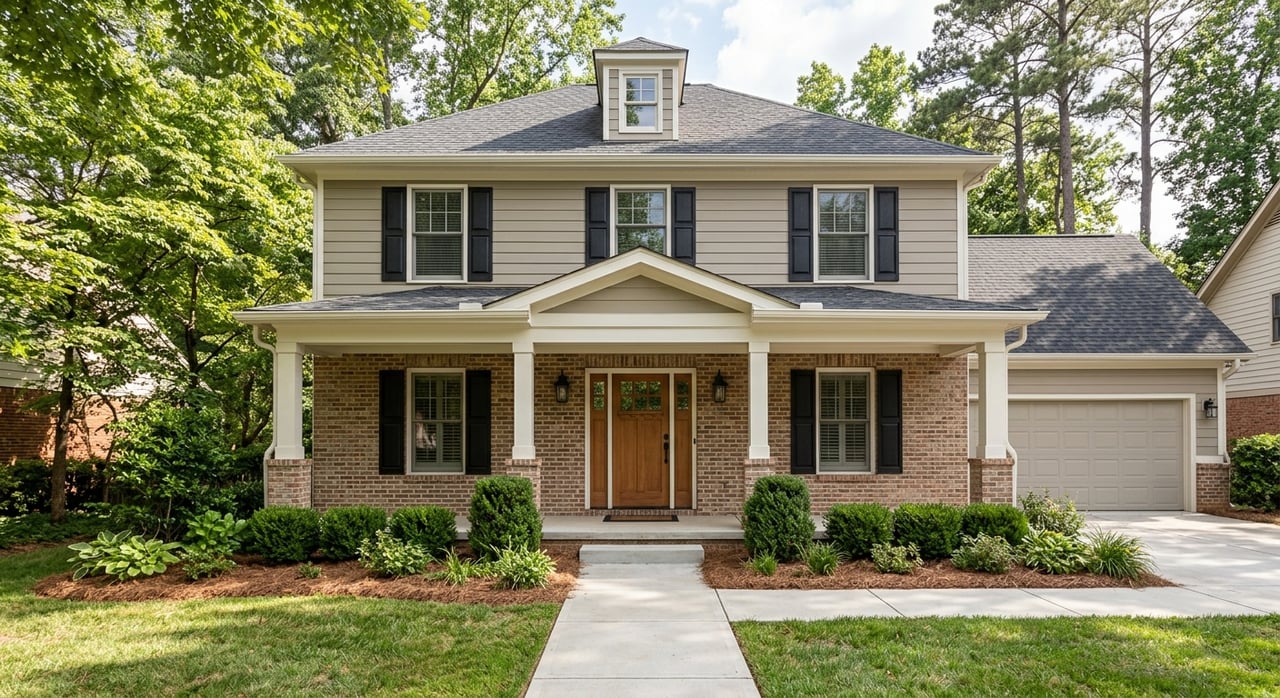
Relocating To Sandy Springs For Work Or Life Change
May 28, 2026
May 28, 2026
Thinking about a move to Sandy Springs because of a new job, a family transition, or a fresh start? You are not alone. For many buyers and renters, Sandy Springs stands out because it gives you access to major job centers, MARTA rail, and a wide mix of housing options without leaving metro Atlanta. If you want to make your move with more clarity and less guesswork, this guide will help you focus on what matters most. Let’s dive in.
Sandy Springs works well for relocation because it combines access, convenience, and a broad housing mix in one market. The city’s 2025 population estimate is 105,013, and Census QuickFacts reports a median household income of $104,340. The same source notes that 69.2% of adults age 25 and older hold a bachelor’s degree or higher.
That profile helps explain why the city often appeals to professionals moving for work. The city also reports a mean commute time of 25.8 minutes, plus strong digital connectivity, with 98.8% of households having a computer and 94.8% subscribing to broadband. If your move depends on staying connected and getting around efficiently, those are practical advantages.
Sandy Springs also functions as more than a bedroom community. The city describes itself as part of the Central Perimeter market, with a daytime population that more than doubles. City Springs adds another layer with civic space, arts, and community events that support everyday life after work hours.
If you are relocating for work, your home search should usually start with your commute, not a random map pin. In Sandy Springs, small shifts in location can change your daily routine in a big way because the city has strong road and rail connections.
Driving is a major reason many people choose Sandy Springs. The city is served by Georgia 400 running north-south and I-285 running east-west, with I-75 nearby. Key surface roads include Roswell Road, Johnson Ferry Road, Abernathy Road, Glenridge Drive, and Dunwoody Club Drive.
That network gives you multiple ways to reach different parts of metro Atlanta. The city also states that Hartsfield-Jackson Atlanta International Airport is about 30 minutes away by car, which may matter if your work includes regular travel.
If you want transit access, Sandy Springs has a strong case. The city sits on MARTA’s Red Line, with four rail stations in or adjacent to the city: Medical Center, Dunwoody, Sandy Springs, and North Springs.
Local bus service adds more flexibility. The city identifies MARTA bus routes 5, 87, and 148, with Route 87 running along Roswell Road, Route 148 connecting the medical district and the Northside Drive business district, and Route 5 linking Sandy Springs with Buckhead. MARTA rail also connects the area with Buckhead, Midtown, Downtown, and the airport.
One of Sandy Springs’ biggest strengths is how close it sits to major employment centers. If your move is job-driven, this is one of the clearest reasons to keep the city on your list.
The largest employment concentration is Central Perimeter. According to the city, the Perimeter Center business district is one of the Southeast’s largest Class A office markets and is home to more than 123,000 workers.
That matters because it can widen your housing choices without cutting you off from work. Instead of looking only for a property next to one office building, you can evaluate several parts of Sandy Springs based on how they connect to the larger business district.
Healthcare is another major employment anchor. The city says 40% of metro Atlanta’s available hospital beds are located within Sandy Springs, including Northside Hospital, Emory Saint Joseph’s Hospital, and Children’s Healthcare of Atlanta at Scottish Rite.
The city also names several large employers in the area, including UPS, WestRock, Veritiv, Newell Brands, ICE/NYSE, ServiceMaster, Graphic Packaging, Cox Communications, Inspire Brands, Focus Brands, and Mercedes-Benz USA. For relocating professionals, that kind of employer base can make Sandy Springs a practical choice not just for one role, but for long-term career flexibility.
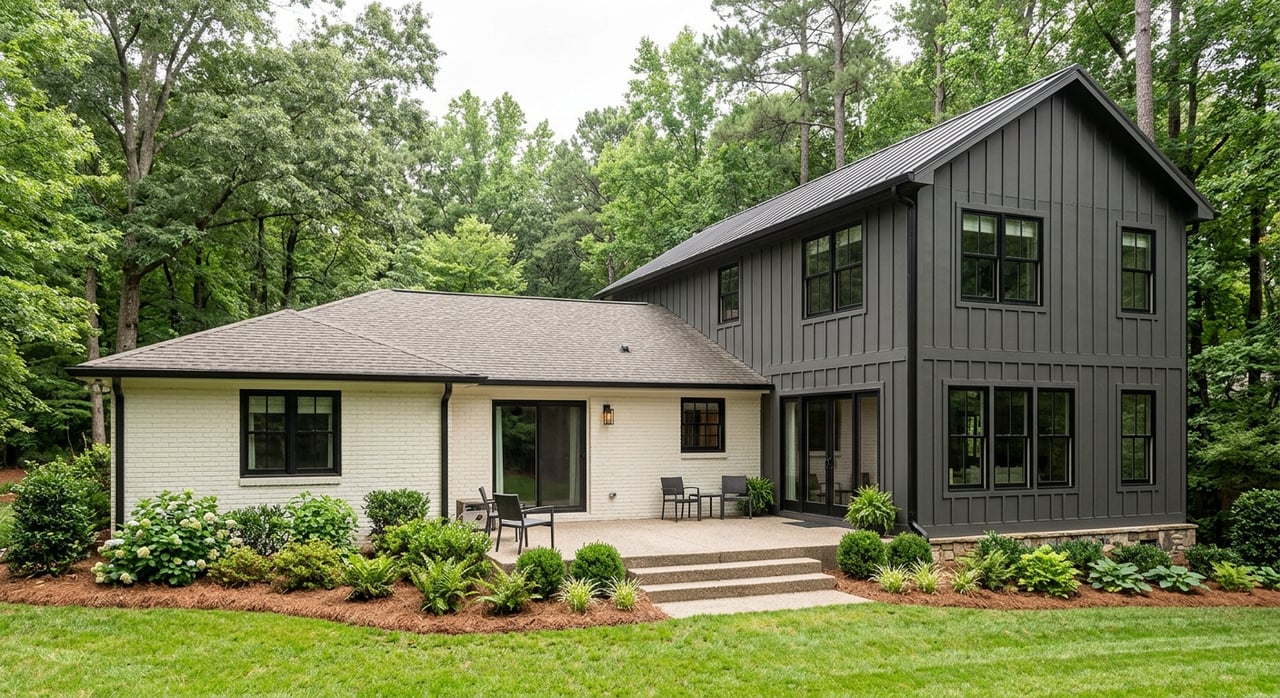
Sandy Springs is not a one-product housing market. You will find a real mix of apartments, attached homes, and detached homes, and that is important to understand before you start touring.
Census QuickFacts shows a 50.2% owner-occupied rate, a median owner-occupied home value of $619,800, median monthly owner costs of $2,814 with a mortgage, and a median gross rent of $1,870. Those figures point to a market where both renting and owning play a meaningful role.
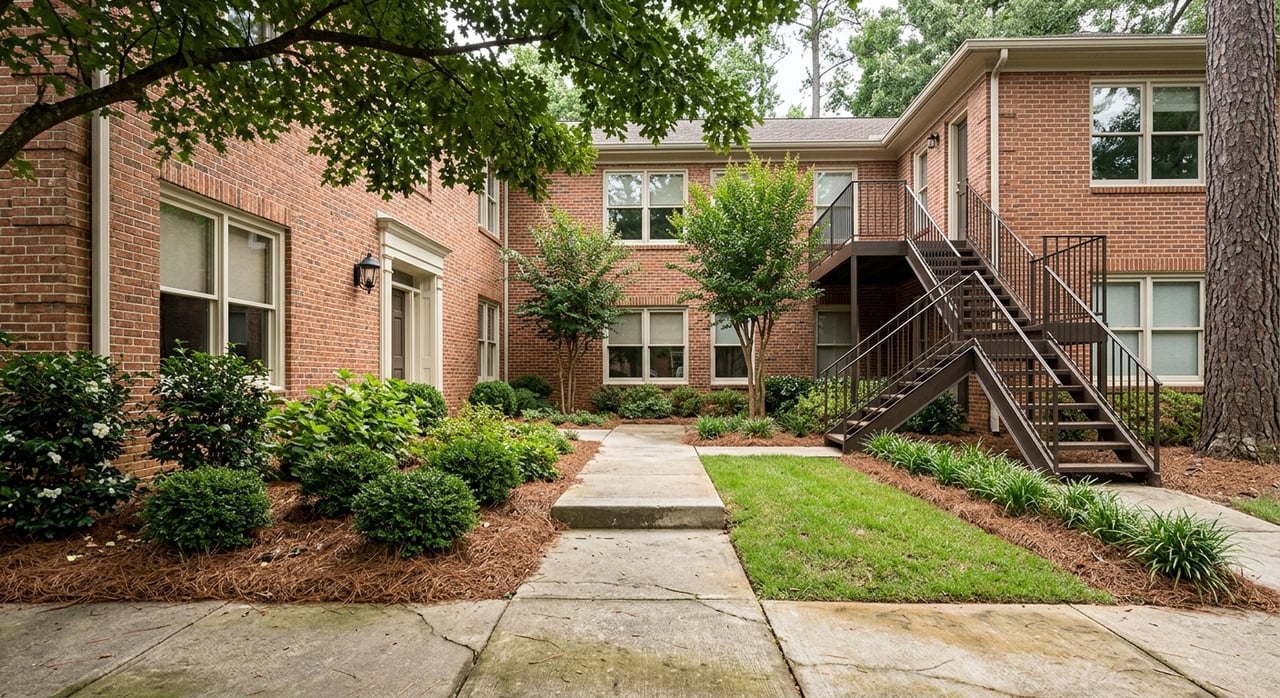
If you want flexibility during a move, Sandy Springs has substantial apartment inventory. The city says it currently has 96 apartment complexes, with two more under construction. It also requires annual inspections of multifamily rental housing.
That rental supply can be useful if you are arriving on a tight timeline or still learning the metro area. It gives you the option to get settled first and buy later, rather than rushing into a purchase before you understand your daily patterns.
For buyers who want more space or long-term ownership, the city offers more than just new apartments. A housing needs assessment found that between 2011 and 2018, 6,707 housing units were built in Sandy Springs, with 65% classified as multifamily and 35% as single-family.
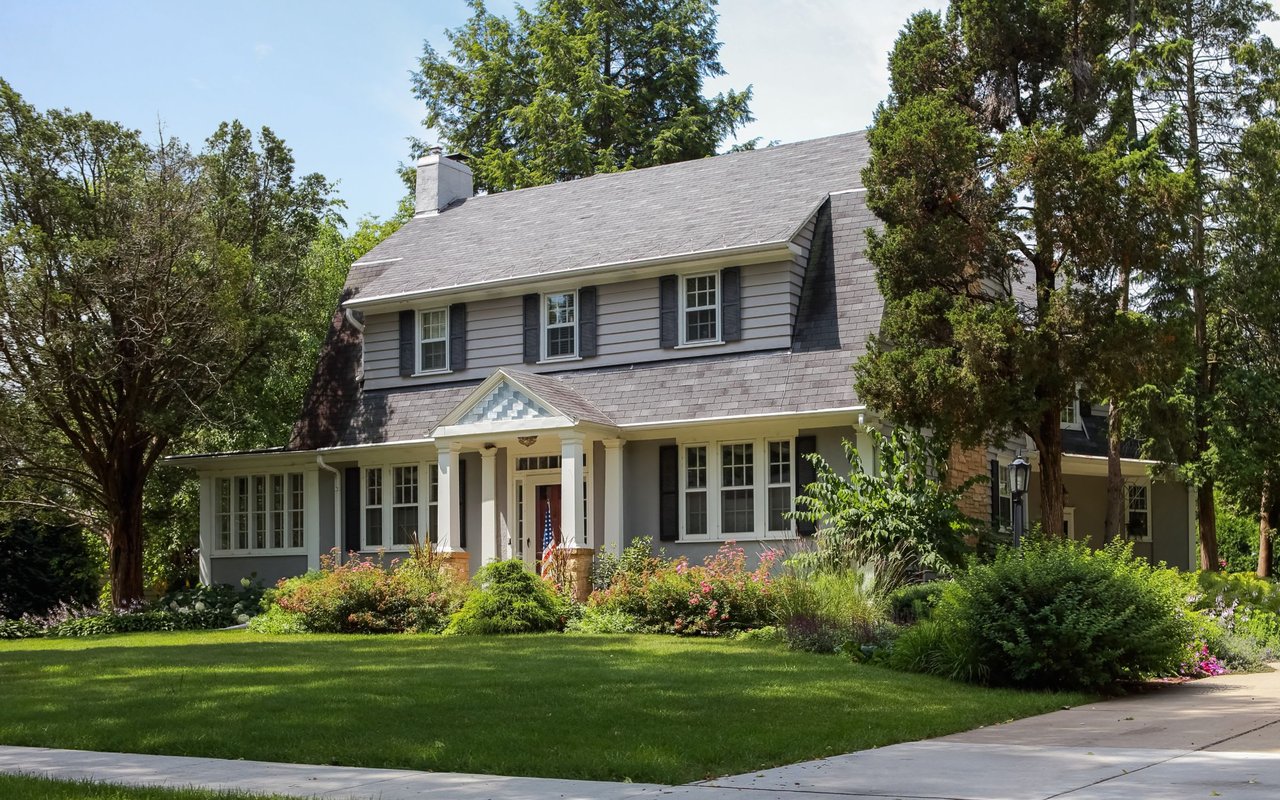
The same report says much of the city’s single-family housing stock was built between 1960 and 2000. That can be useful if you like established homes, renovation potential, or a different entry point than brand-new construction.
Relocating gets easier when you use a simple filter system. In Sandy Springs, four filters can help you compare homes more clearly: commute time, housing type, lifestyle anchors, and city fit.
If your job is in Central Perimeter, near a hospital campus, or in another rail-connected part of Atlanta, begin by mapping that route first. Because Sandy Springs sits on GA-400, I-285, and the MARTA Red Line, a modest move north, south, east, or west can affect your routine more than you might expect.
This approach helps you avoid wasting time on homes that look appealing online but do not work well day to day. It also keeps your search grounded in how you will actually live.
Before you schedule tours, decide whether you want low-maintenance living, more square footage, or a balance of both. If your priority is transit access and simplicity, multifamily options near station areas may make sense. If your goal is space and long-term ownership, attached or detached single-family homes may deserve more attention.
This matters in Sandy Springs because the city’s housing stock is genuinely mixed. You are not choosing within one narrow category, so it helps to define your priorities early.
Sandy Springs provides official zoning and character area maps that can help you verify what is allowed around a property. That is especially helpful when you are relocating and still learning how the city is organized.
The city also identifies six focus areas used in planning: Greater City Springs, Central Perimeter, North End, Powers Ferry, Neighborhood Village, and Crossroads. These are not neighborhood labels, but they can still help you understand how different parts of Sandy Springs function.
For some relocators, a rent-first strategy is the smartest move. If your relocation is work-driven and you are still figuring out the commute, schools, routines, or long-term fit, a short rental period can reduce pressure.
That approach also lines up with the city’s current housing numbers. With a median owner-occupied home value of $619,800 and a median gross rent of $1,870, some buyers may prefer to learn the area before making a purchase decision.
A move is not only about work. It is also about how your new city feels once the workday ends.
If civic space, arts, and community events matter to you, City Springs is an important local anchor. If rail access and future walkability matter most, the North Springs station area is worth watching. The city says the North Springs MARTA Corridor Study is intended to improve pedestrian and bicycle access, support walkability, and create a transit-oriented development concept for the station area.
The city also highlights access to the Chattahoochee River at Murphs Surf for outdoor recreation. For residents who want help getting oriented, Sandy Springs has a Neighborhood Resources office that serves as a liaison to homeowner associations and neighborhood groups and helps connect residents to local service and safety resources.
The most efficient Sandy Springs relocation plan is usually the one that stays focused on a few practical questions. How will you get to work? What type of home fits this stage of life? Which parts of the city support your routine outside the office? And does the property fit the city’s planning context around it?
When you answer those questions early, your search becomes more manageable. You can compare homes based on real priorities instead of reacting to every new listing.
Sandy Springs offers a rare combination of highway access, MARTA rail, major employment hubs, healthcare concentration, and varied housing choices. For many relocators, that mix is exactly what makes the city feel workable from day one and flexible for the long term.
If you are planning a move to Sandy Springs and want grounded, local guidance on where to start, the Christine Bradley Team can help you build a focused search around your commute, housing goals, and timeline.



Our team’s unprecedented professionalism, skill, and attention to detail has allowed us to set sales records for the past 30 years. We will ensure your buying or selling experience exceeds your expectations.
Get In Touch With Our Team To Learn More
ADDRESS 3290 Northside Parkway Ste. 200 Northwest Atlanta, GA 30327